Every lead should know which ad brought it

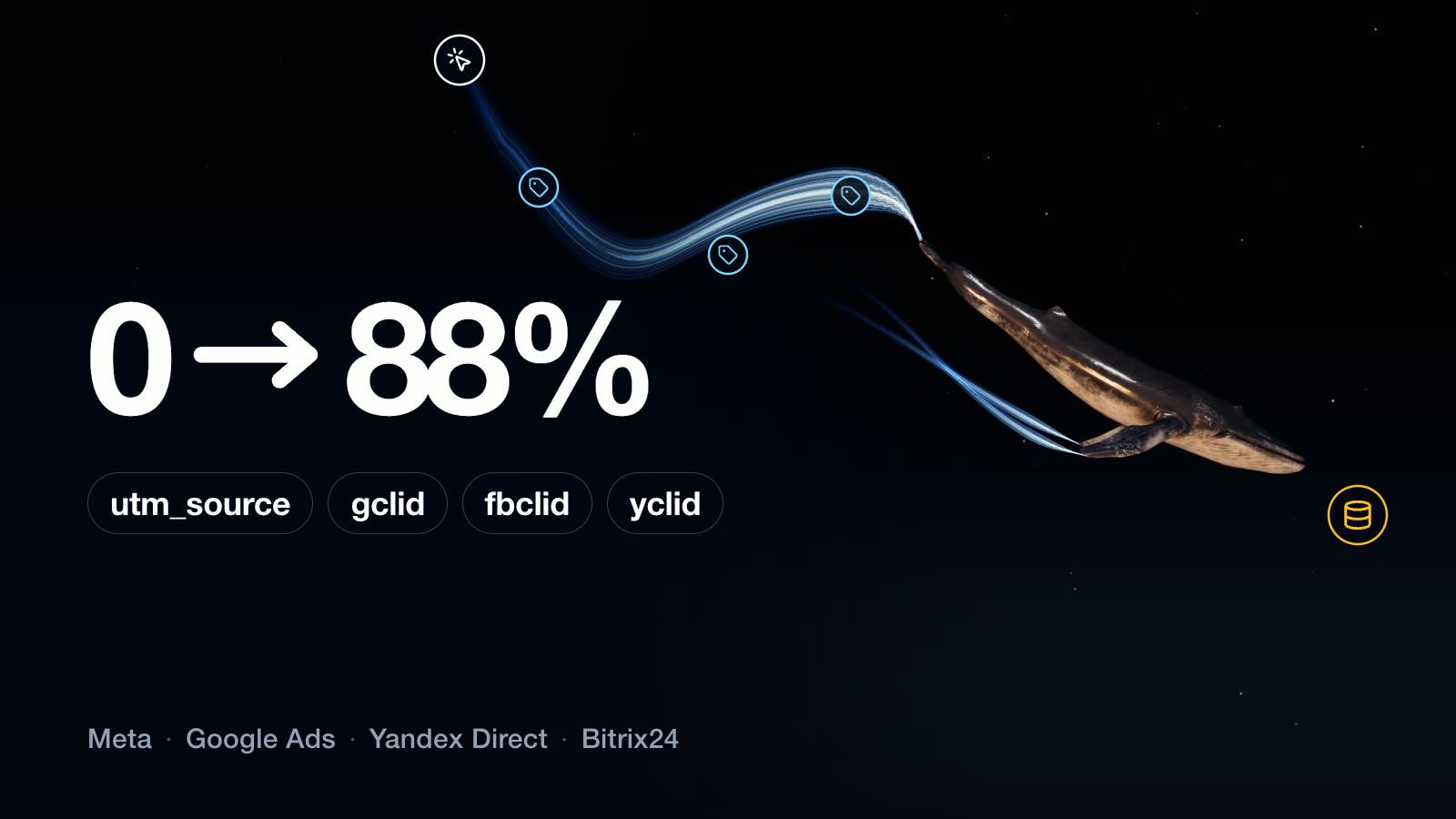
In short: if a lead lands in the CRM without the ad that produced it, the only thing you can optimise is the price of a form fill. Carrying the source from the click to the deal is mostly plumbing — and on one project that plumbing took the share of leads with a known ad from zero to 88%.
Why it matters
Ad platforms report leads. The business cares about deals. The only bridge between the two is a record attached to each lead saying which campaign, ad and keyword it came from. Without that record every budget decision is made on the cheapest enquiry, not on the people who actually buy.
What to capture
- UTM tags — source, medium, campaign, content, term. You write them yourself; they describe the campaign in your own words.
- Click IDs — added by the platform:
gclidfor Google Ads,fbclidfor Meta,yclidfor Yandex Direct,ttclidfor TikTok. They identify one specific click, and you need them to send conversions back to the platform later. - The referrer — the site the visitor came from, for visits with no tags at all.
- The landing page and the time of the visit.
Where the source gets lost
- The form is not on the landing page. Tags are in the address bar only on the first page. Save them on arrival and attach them when the form is sent.
- The visitor comes back days later. If you only read the current address, a returning visitor looks like a direct one. Keep the record in the browser between visits.
- The form sends only a name and a phone. The CRM needs fields for the source, and the form has to fill them.
- A redirect strips the parameters. Language switches,
httptohttpsand trailing-slash redirects are the usual suspects. Click every ad link yourself and watch the address bar. - Calls and messengers bypass the form. They need their own solution — separate numbers or tagged links.
First touch and last touch
Keep two records, not one. The first touch says how a person discovered you. The last touch says what brought them back to send the form. A lead that first came from Instagram and returned through a branded search is a different story from either source alone — and it changes which campaign you credit.
How this site does it
The contact form on this website works exactly this way. On arrival it stores the UTM tags, click IDs and referrer in the browser. Moving between pages or reloading does not overwrite them. When the form is sent, the message I receive includes the first touch, the latest campaign touch, the page the form was sent from and the language. Nothing is sent anywhere until the visitor submits the form.
Close the loop
Once the CRM knows the ad behind each lead, two things become possible:
- report cost per qualified lead and per deal, not per form fill;
- send deal stages back to the platforms — Meta Conversions API, Google offline conversions — so their algorithms learn from buyers rather than from clicks.
A two-minute test
Open one of your own ad links, with its tags. Visit two more pages. Send a test enquiry. Then open the lead in the CRM: does it show the campaign? If not, that is the first thing to fix — before any new creative or budget. The full tracking audit has six more checks like this one.
Read next
From ad clicks to signed deals: rebuilding marketing attribution
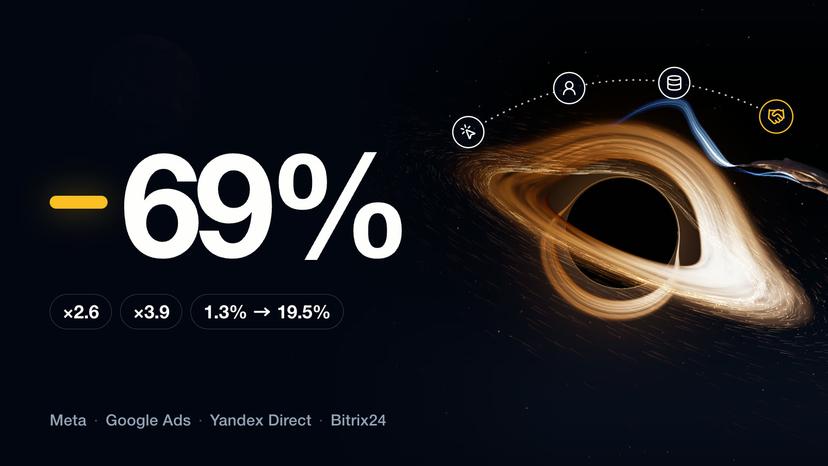
How fixing ad-to-CRM tracking cut a residential developer's cost per result by 69% on an 18% smaller budget.
An ad tracking audit in seven checks
How to verify that conversions really reach the ad platforms and the CRM — the checks that found a silently broken Conversions API feed.