Cost per lead down 23% while the auction got 61% pricier

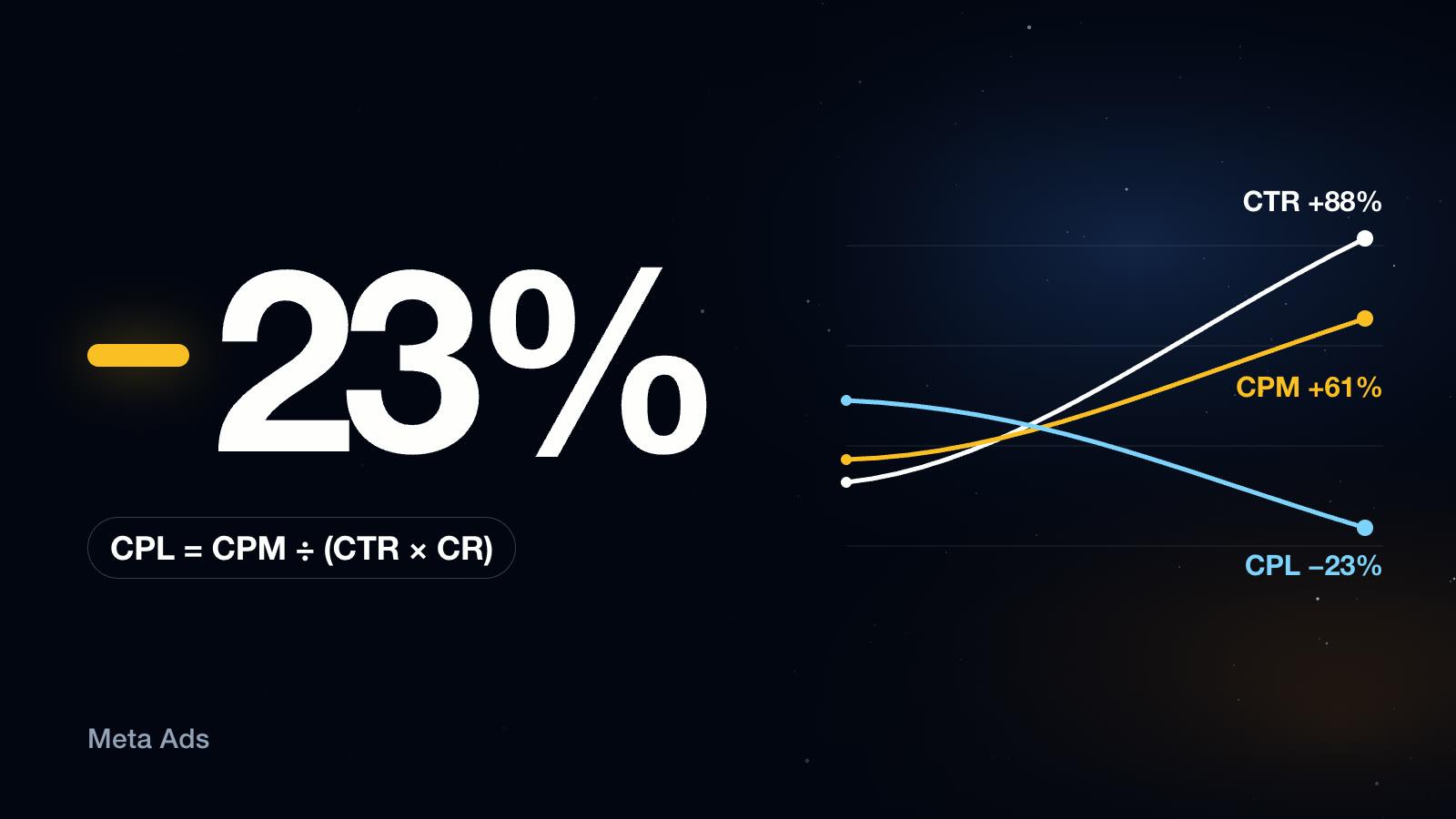
In short: year over year, in the same admissions season, a British university's cost per lead fell 23% even though the price of reaching people rose 61%. Leads grew 18% on a 9% smaller budget. The arithmetic shows exactly where that came from.
The numbers
Comparing the same season, one year apart:
- cost per 1,000 impressions (CPM): +61%
- link click-through rate (CTR): +88%
- cost per lead (CPL): −23%
- leads: +18%, on a budget 9% smaller
A 61% rise in CPM looks like bad news on its own. It is not the whole story.
The formula
Cost per lead is made of three parts:
CPL = CPM ÷ (1000 × CTR × conversion rate)
where the conversion rate is the share of clicks that become leads. One part you mostly cannot control — the auction price. Two you can.
Step one: the click
Cost per click is CPM divided by click-through rate. CPM went up 1.61 times; CTR went up 1.88 times:
1.61 ÷ 1.88 ≈ 0.86
So each click became about 14% cheaper, in an auction that was 61% more expensive. Better click-through did more than cancel the rise in prices.
Step two: the lead
Cost per lead fell to 0.77 of the year before, while cost per click fell to 0.86:
0.86 ÷ 0.77 ≈ 1.11
About 11% more of the clicks turned into leads. So the result has two sources, and the larger one is the click-through rate.
A check
Does it add up? A budget of 0.91 divided by a cost per lead of 0.77 gives 1.18 — exactly the 18% more leads that were recorded. When the pieces of a result reproduce the total, you can trust the pieces.
What each lever responds to
- CPM follows competition and season. You influence it only at the edges, which is why the comparison has to be season against season: admissions demand in August is nothing like February.
- CTR is about fit — the right message for the right audience at the right moment in their decision. It is the lever with the most room, and here it carried most of the gain.
- Conversion rate is about what happens after the click: how fast the page opens, how much the form asks for, and whether the page delivers what the ad promised.
The takeaway
When the auction gets more expensive, do not judge a campaign by CPM, and do not stop at CPL either. Break the result into its parts. It shows which lever actually moved — and which one to pull next. When you plan next year, build the budget from actual spend, with room for a pricier auction.
Read next
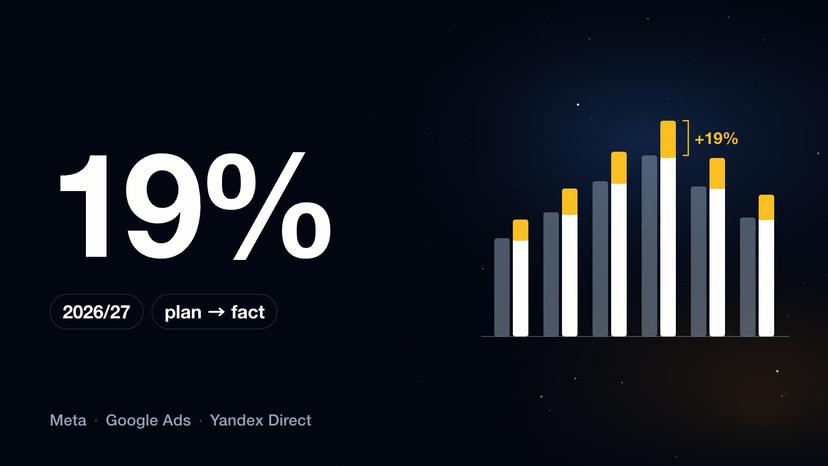
Plan next year's ad budget from what you actually spent
Why last year's plan is the wrong baseline — and how a budget rebuilt on real spend exposed a 19% gap.
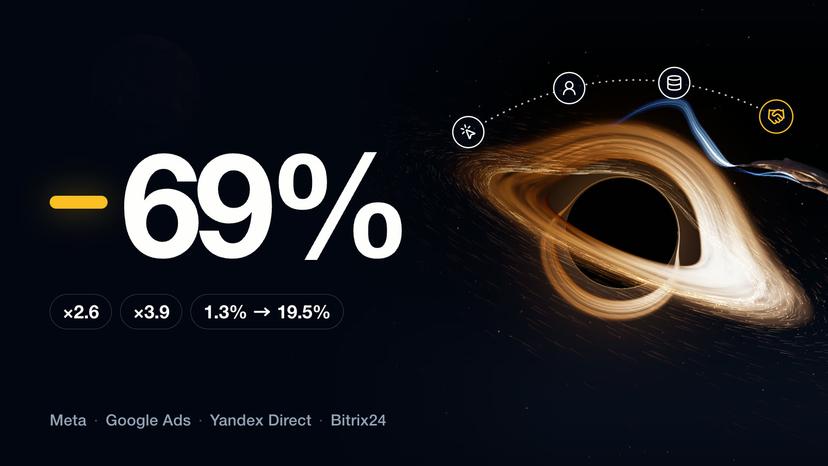
From ad clicks to signed deals: rebuilding marketing attribution
How fixing ad-to-CRM tracking cut a residential developer's cost per result by 69% on an 18% smaller budget.