The admissions year: what university ads should do, month by month

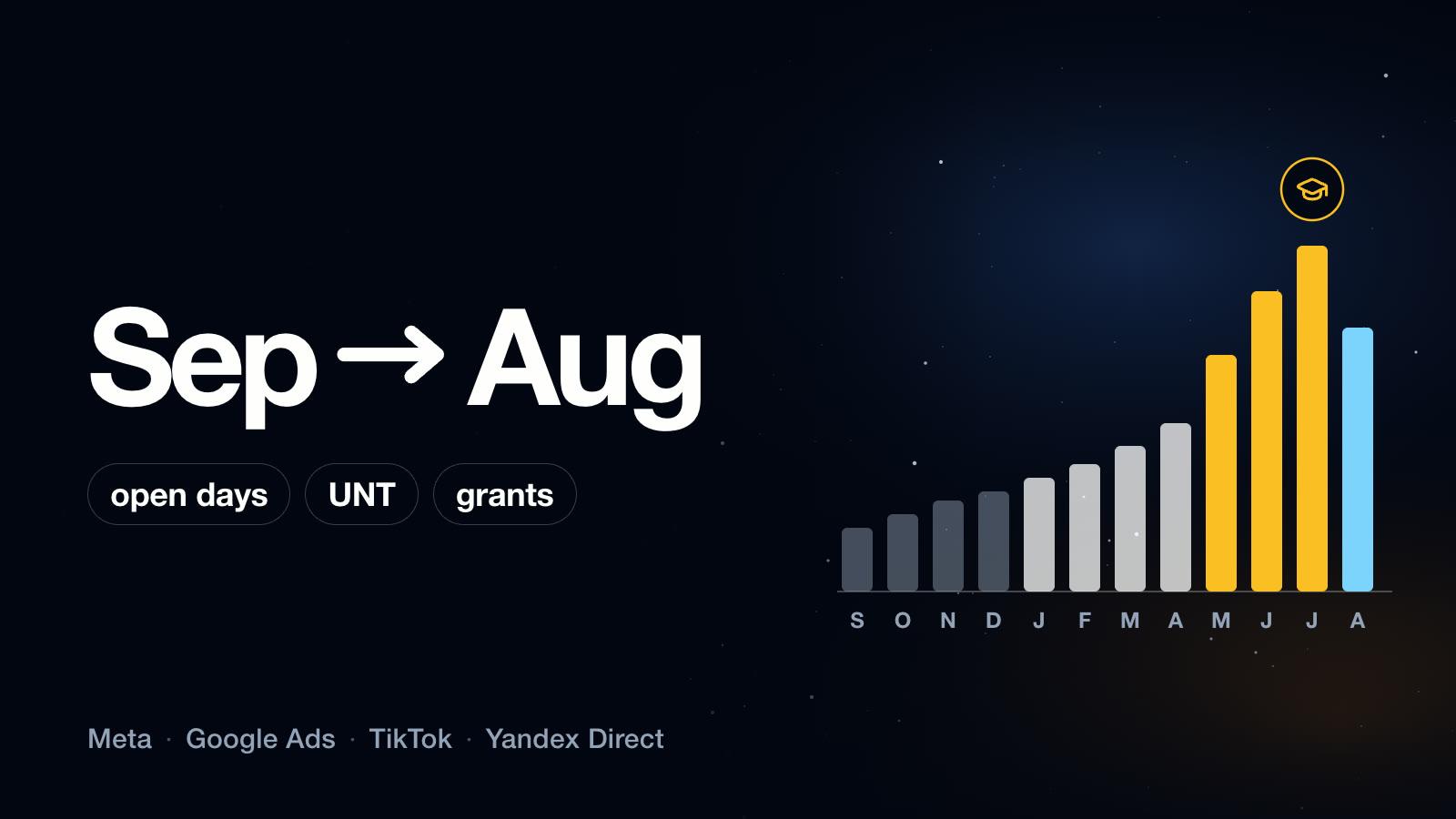
In short: a university does not sell the same way all year. In autumn families are only starting to think; in summer they decide within weeks. Ads, budget and reporting have to follow that rhythm, and a result can only be judged against the same weeks a year earlier.
Why one flat campaign fails
An always-on campaign with one message and an even monthly budget overspends while few people are deciding, then runs out of steam exactly when demand peaks. Admissions has a clear calendar, built around the school year, exams and deadlines. Plan the marketing on that calendar.
The four stages
The timing below is for an undergraduate intake in Kazakhstan; shift it to your own programmes and dates.
- Autumn: be known (September–December). School-leavers and parents start comparing options. The goal is reach and recognition: short video, the campus, students' stories, invitations to open days. Measure reach, views and event sign-ups, not cost per lead.
- Winter and spring: collect interest (January–April). Families build a shortlist. The goal is enquiries and registrations: consultations, open days, trial tests, foundation programmes. This is also when the retargeting audiences for the summer are built.
- Exams and results: the peak (May–July). After final exams and UNT results, families decide fast. The goal is applications. The budget goes up and the messages get concrete: deadlines, entry requirements, scholarships, what documents to bring.
- Before the deadline: close (August). Grant results come out and the last families make up their minds. The goal is finished applications and enrolment. Spend more on the warm audience — people who enquired, visited or started an application — than on strangers.
The budget follows the calendar
Put the money where decisions happen, not in equal monthly slices. Keep the autumn and spring stages running: they fill the audiences the summer converts. Build the plan from actual spend, month by month, and leave room for prices — in the peak every university in the country bids for the same families.
Compare season with season
Never compare August with February. Compare this year's admissions weeks with last year's. That is how a British university's cost per lead fell 23% while the auction got 61% pricier — and how you can tell it was not luck.
Measure the intake, not the month
An enquiry in March may become a student in August. Report by intake: of the people who enquired for this autumn, how many applied, how many enrolled and which campaign brought them. For that, every lead has to carry its source into the CRM and keep it for months.
The takeaway
Write the admissions calendar first: exam dates, results, deadlines, open days. Then give each stage its own goal, message and metric. A campaign that does the right job at the right time costs less than one that tries to do every job all year.
Read next
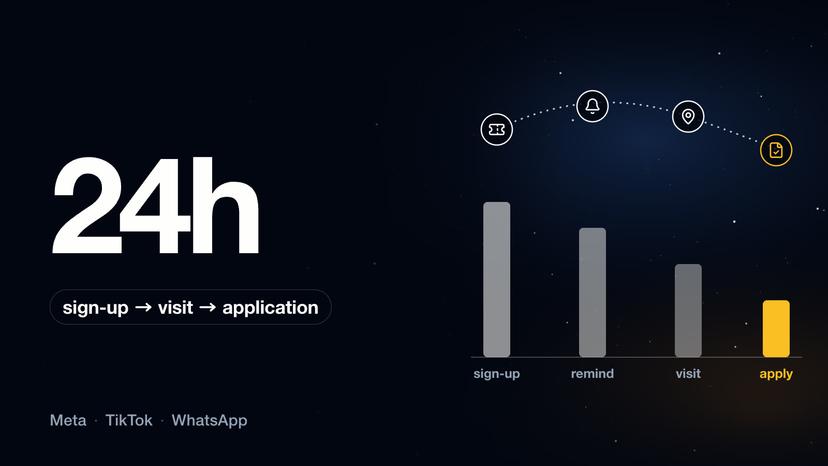
Open days that turn into applications
How to promote a university open day so visitors become applicants: registration, reminders, check-in and the follow-up in the next 24 hours.
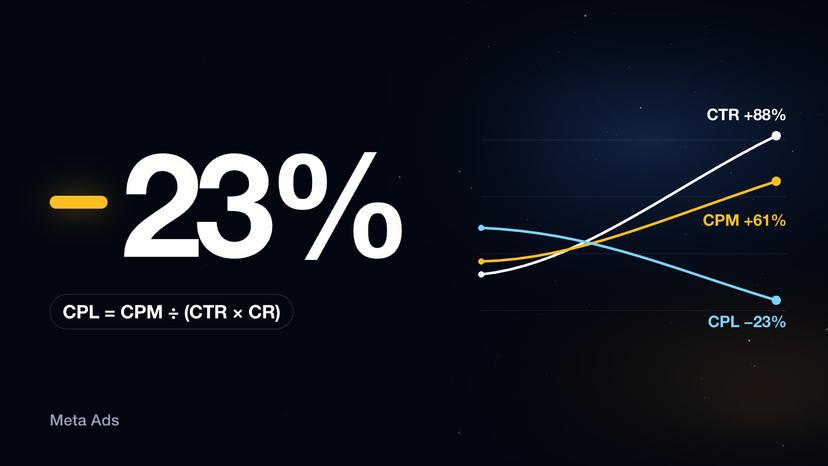
Cost per lead down 23% while the auction got 61% pricier
Taking apart a cost-per-lead drop for a British university in Kazakhstan: what the auction took away, and what click-through and conversion gave back.