Two audiences, one decision: marketing a university to students and parents

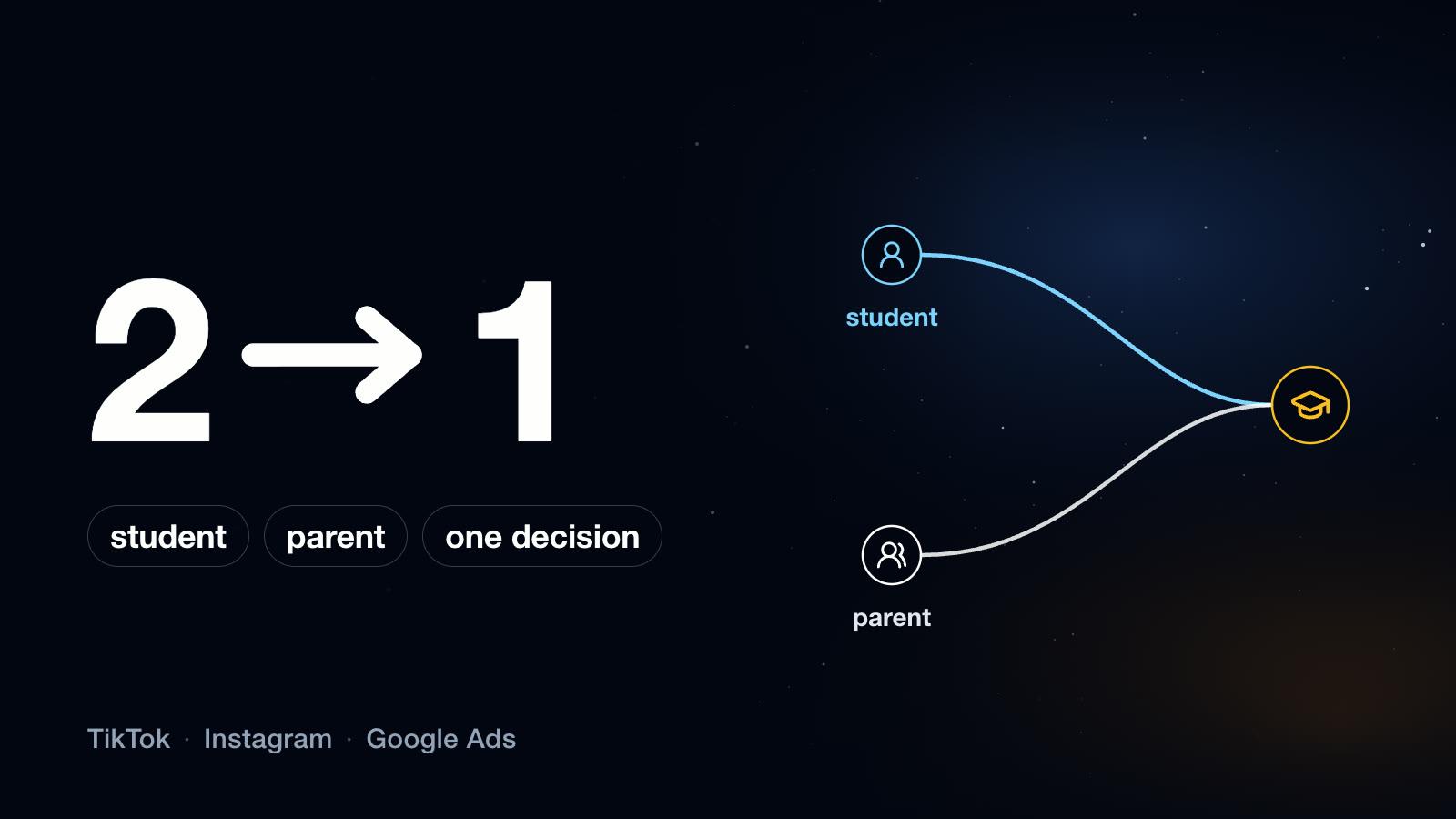
In short: a school-leaver and a parent ask different questions about the same university. Ads that try to answer both at once answer neither. Split them: different channels, different messages, and a form that records who is asking.
Who decides
For an undergraduate intake, the applicant chooses where they want to be, and the family — often a parent — decides whether it is possible: the cost, the city, the risk. Both have to say yes. Marketing that speaks to only one of them loses the other at the kitchen table.
What each one wants to know
The student:
- what life there looks like — people, campus, the city;
- what they will actually study and do;
- where graduates go next;
- whether they will get in.
The parent:
- whether the diploma is recognised and worth the money;
- the full cost, payment options, scholarships and grants;
- safety, accommodation, who looks after first-year students;
- outcomes: jobs, further study, salaries.
Where to reach them
- Students live in short video: TikTok, Instagram Reels, YouTube Shorts. Real students on camera work better than a polished brand film.
- Parents are easier to reach in Instagram and Facebook feeds, in search and in messengers. They read longer posts and click "learn more".
- Search catches both when the decision is close: programme names, "university in Astana", entry requirements, fees. Here the ad answers the exact question that was asked.
Run the two as separate campaigns or ad sets with their own creative. Mix them in one campaign and the algorithm drifts towards whoever is cheaper to reach — usually a teenager who is just scrolling.
Language
In Kazakhstan the same family may prefer Kazakh, Russian or English. Make ads and landing pages in every language you admit in, and keep the language with the lead: admissions should call back in the language the person chose.
Let the form say who is asking
Add one question: "I am a student / a parent". It costs nothing and changes everything after it:
- admissions opens the conversation the right way;
- reports show which campaigns bring parents and which bring students;
- you can see which of the two turns into applications.
Together with the ad source on every lead, this shows not only which ad worked, but who it worked on.
One page, two paths
One landing page can serve both if it is built for scanning: the student path first (programmes, campus life, students' stories), the parent path clearly signposted (fees, scholarships, recognition, accommodation). The form sits at the end of both.
The takeaway
Write two briefs, not one: one for the student, one for the parent. Give each its own channel and message, and make the form record which of them you are talking to. Then measure applications, not clicks — and you will see which conversation actually fills the seats.
Read next
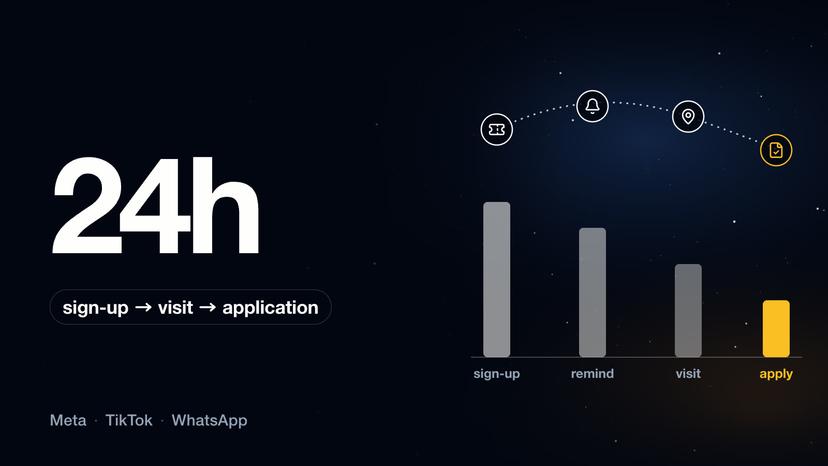
Open days that turn into applications
How to promote a university open day so visitors become applicants: registration, reminders, check-in and the follow-up in the next 24 hours.
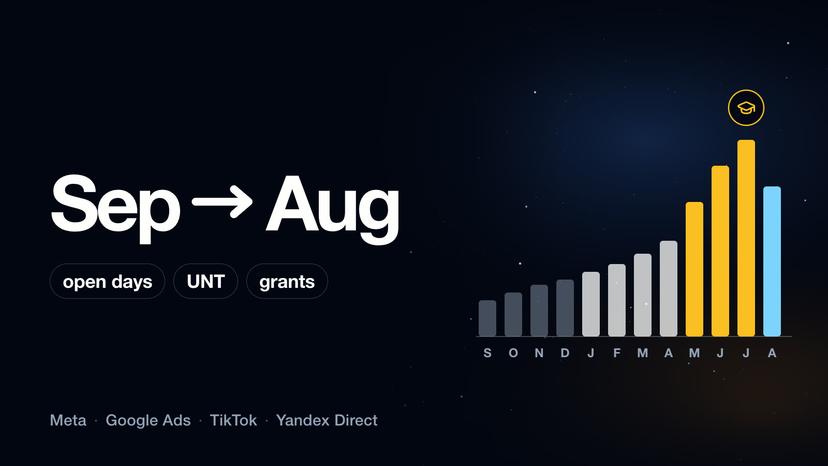
The admissions year: what university ads should do, month by month
Admissions marketing is a calendar, not a campaign. How to split the year into stages, and why results have to be compared season to season.