Open days that turn into applications

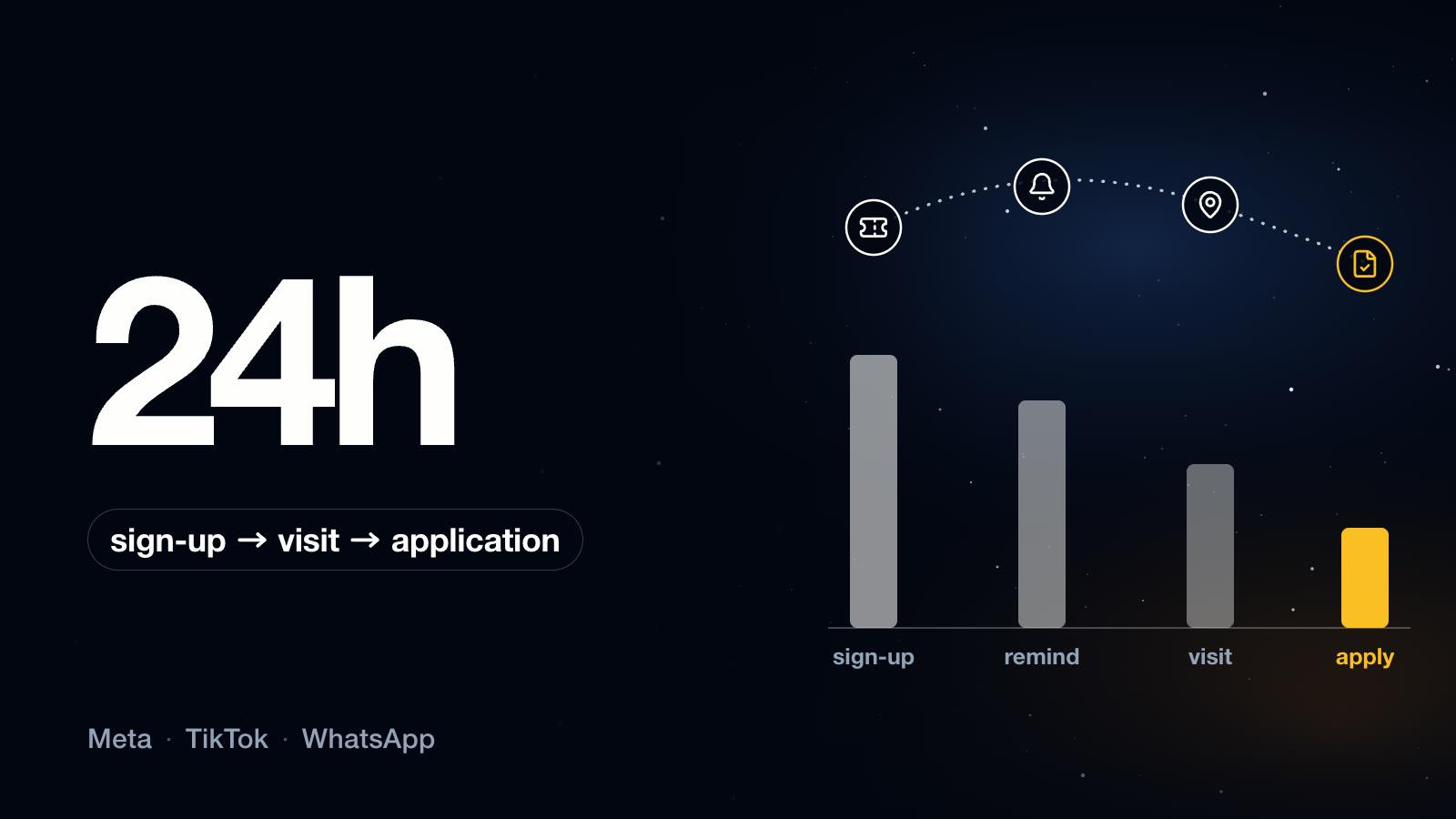
In short: an open day is the strongest conversion point a university has — a family that walks onto the campus is close to a decision. But a registration is not a visit, and a visit is not an application. Promote the event, track every step, and follow up the next day.
Why events matter
An ad can explain a programme. A visit lets a family feel the place, meet lecturers and students, and ask about money face to face. For many families the open day is when "maybe" becomes "yes" or "no". That makes events worth a large share of the admissions effort — if they are measured properly.
Before: registration
- One landing page per event, with the date, the programme, the address and a short form.
- Tagged links in every ad and post, so each registration keeps its source — the same traceability as for any other lead.
- A short form: name, phone, programme of interest and who is coming — a student, a parent, or both.
- The registration is the conversion the campaign optimises for, not a page view.
Between: reminders
Many people who register never come. Reminders close part of that gap:
- a confirmation straight after registration, with the date, time and a map;
- a reminder the day before;
- a short message on the morning of the event.
For this audience messengers work better than email. Send from the university's official account, and make it easy to say "I can't come any more".
On the day: count who came
Check people in at the entrance against the registration list, and register walk-ins on the spot. Without this you cannot tell the campaigns that brought visitors from the ones that brought only sign-ups.
After: the next 24 hours
Interest is highest right after the visit. Within a day:
- thank everyone who came and send what was promised — the presentation, fees, the application link;
- have admissions call families who asked about specific programmes;
- send a different message to people who registered but did not come: the next date, or a consultation.
Measure the whole chain
For every event, report:
- registrations, and the cost of one;
- visitors, and the share of registrations who came;
- applications from visitors over the admissions season.
Cost per visitor and cost per application say far more than cost per registration. A cheap campaign whose registrants never show up is the most expensive one you run. And count by cohort, as with any long decision: every application from this event's visitors belongs to the event, whenever it arrives.
The takeaway
Treat the open day as a funnel with four steps — registration, attendance, follow-up, application — and give each step an owner and a number. The event itself is only the middle of the work.
Read next
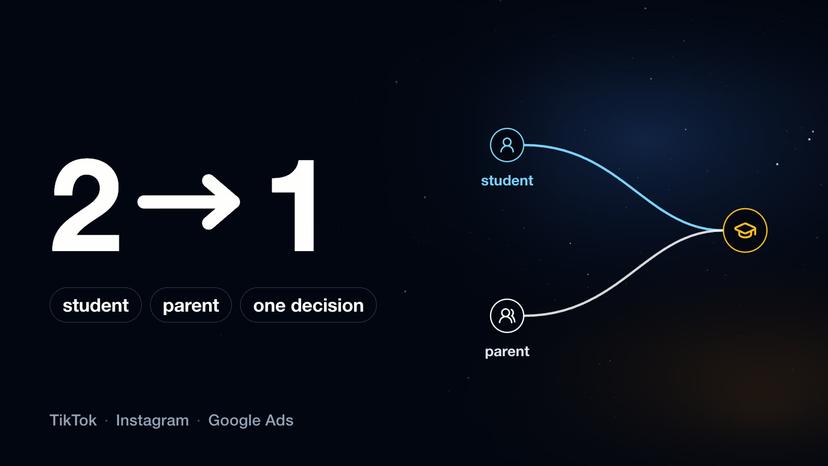
Two audiences, one decision: marketing a university to students and parents
The applicant chooses the university, the family often pays for it. How to split channels, messages and the enquiry form between them.
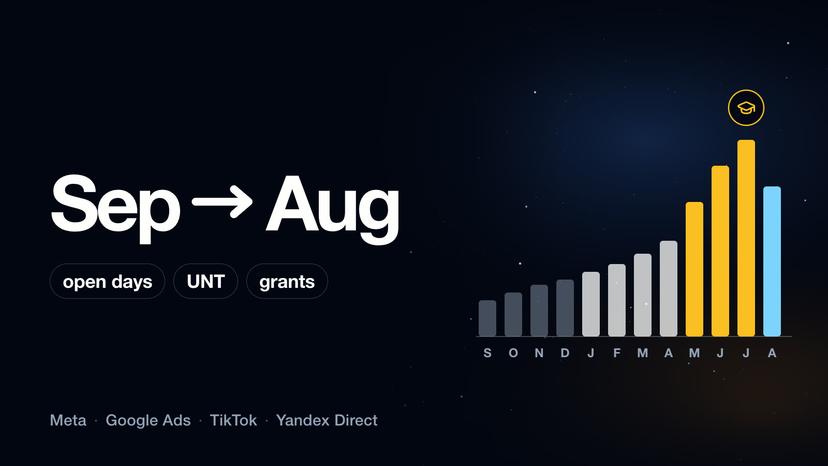
The admissions year: what university ads should do, month by month
Admissions marketing is a calendar, not a campaign. How to split the year into stages, and why results have to be compared season to season.